
Landscape, Ecology & Community
Monterrey, Nuevo Leon, Mexico
2023
Can architecture find opportunity in a place of environmental devastation? “Superbloom” proposes a prototype architectural intervention that inhabits the manmade landscape - a massive limestone quarry - and transforms it into a canvas for architectural exploration and a laboratory - literally and conceptually - for radical ecological research. This is a prototype architecture in the service of ecology, one that explores the emergent possibilities that arise from the cooperation of manmade and natural systems.
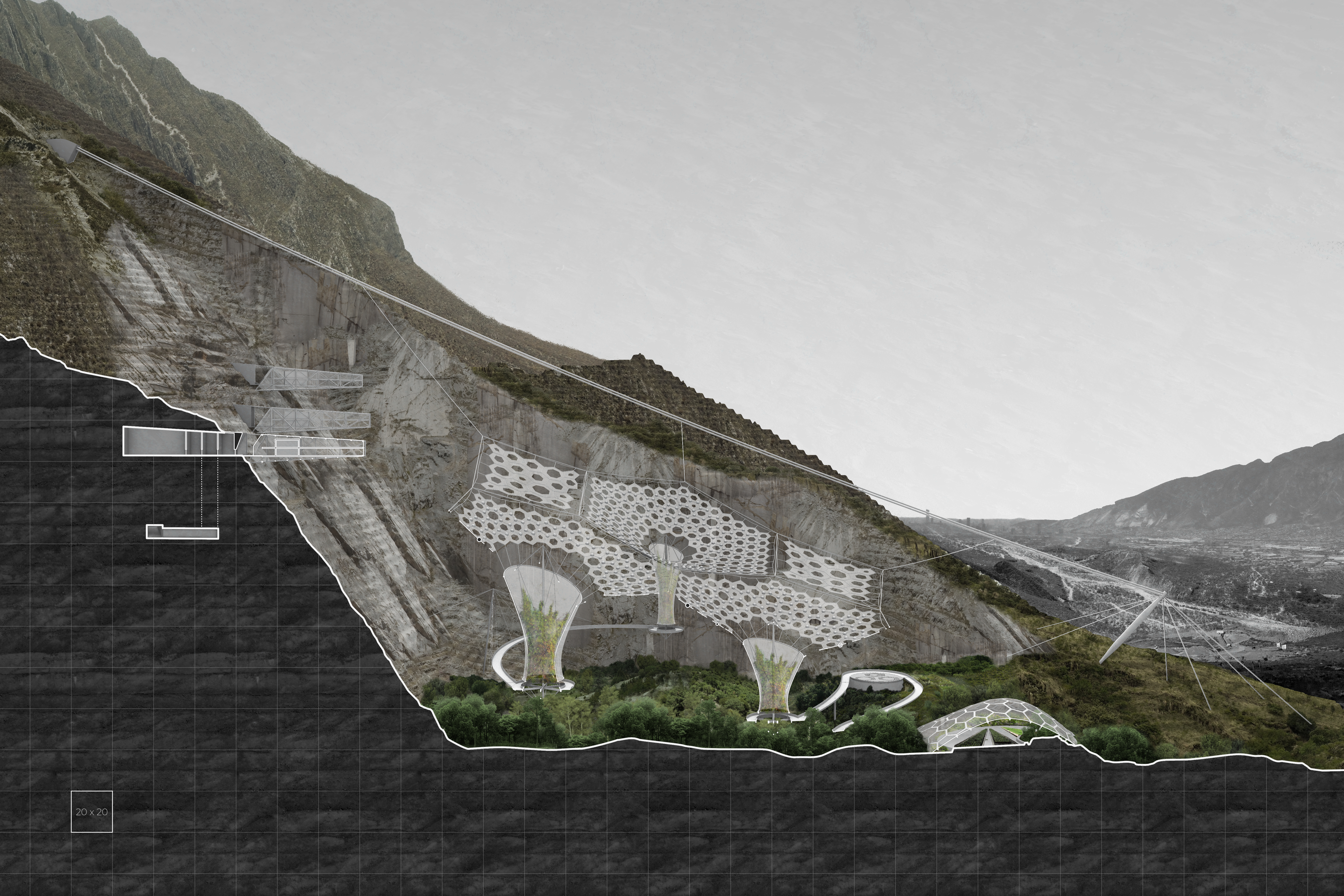
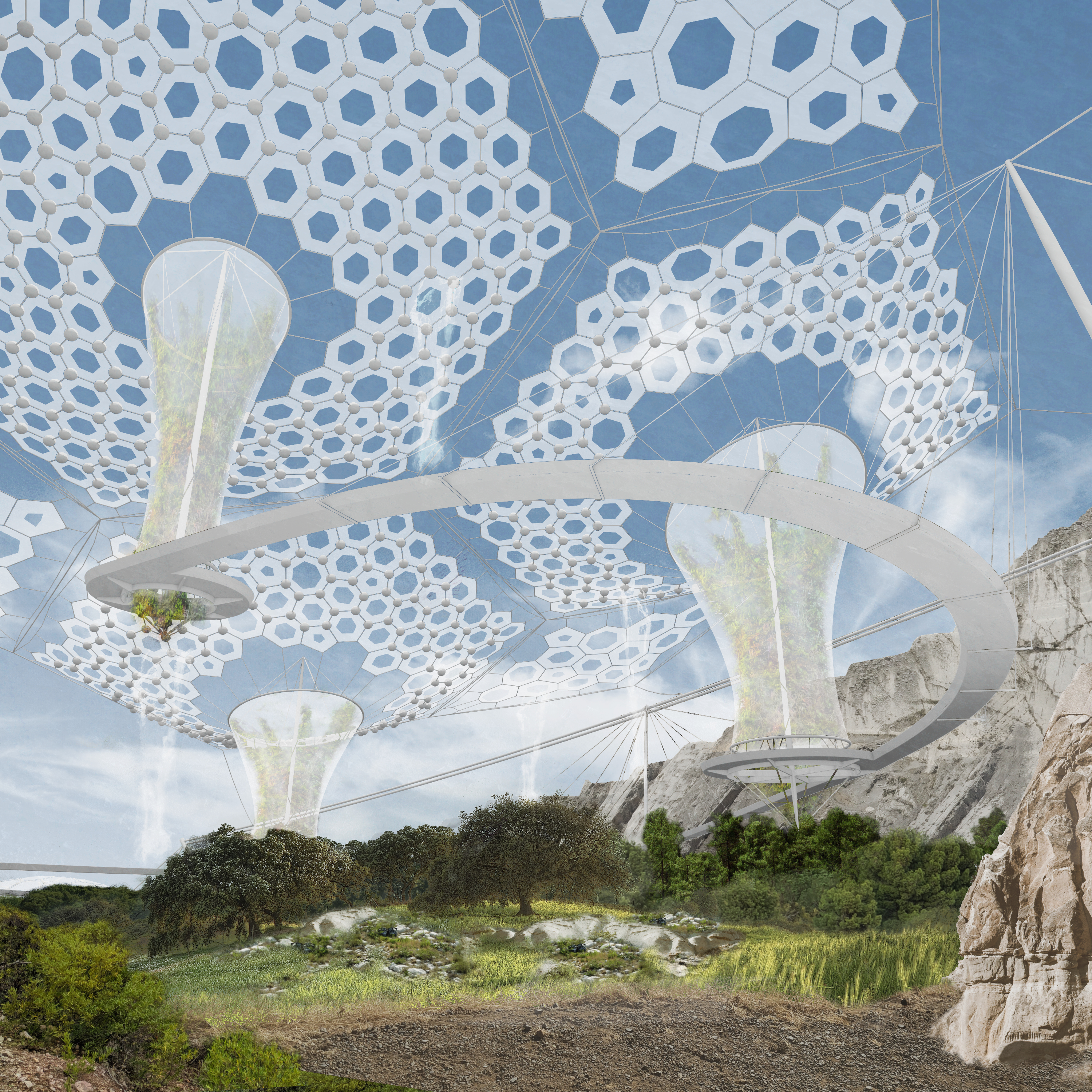
In this vision, the consumption of the landscape is turned on its head. The manmade gash in the landscape reveals a third dimension for ecology, no longer bound to the surface, but free to occupy the volume revealed. The mechanistic megastructures of resource extraction instead become hosts and drivers of ecology, feeding and nurturing it.
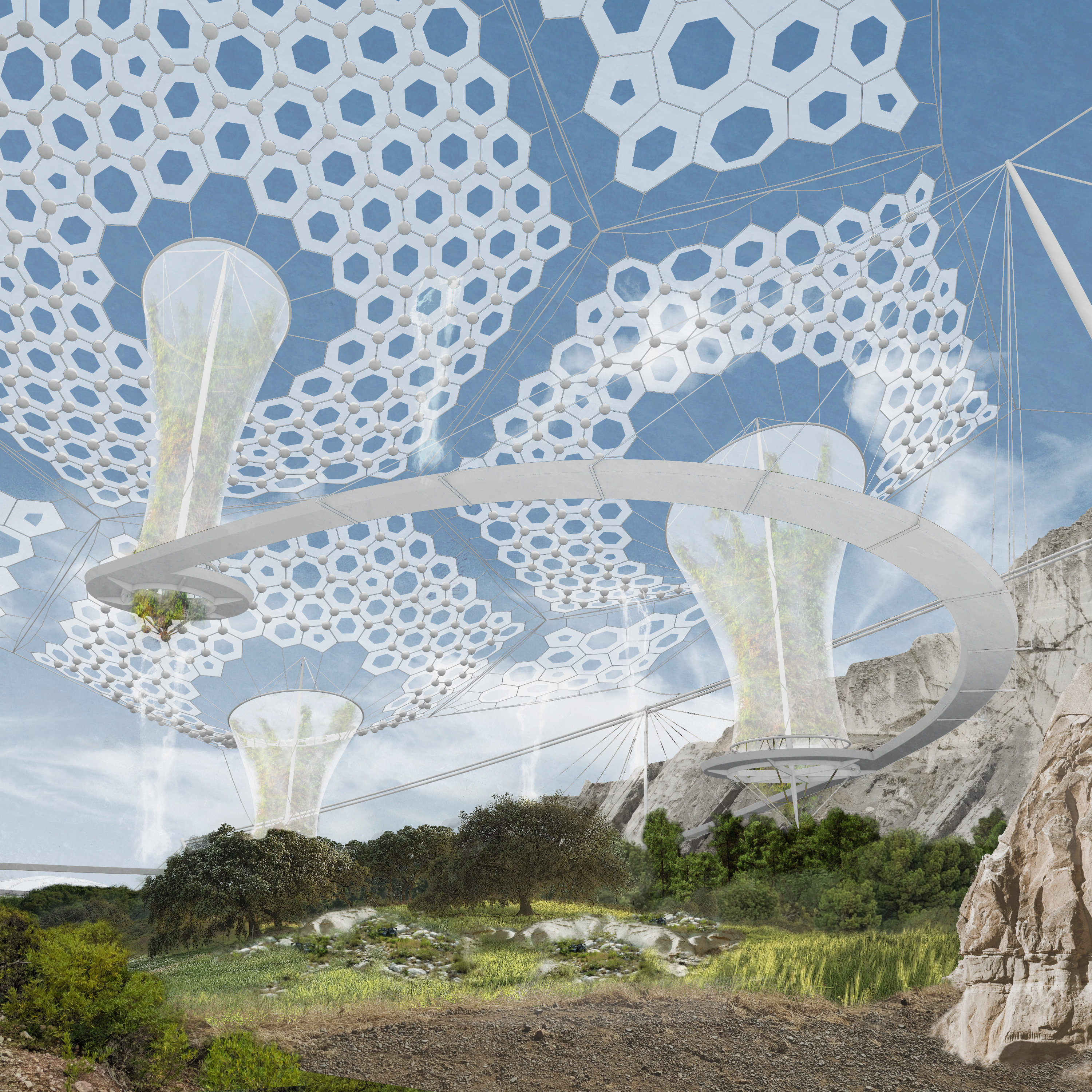
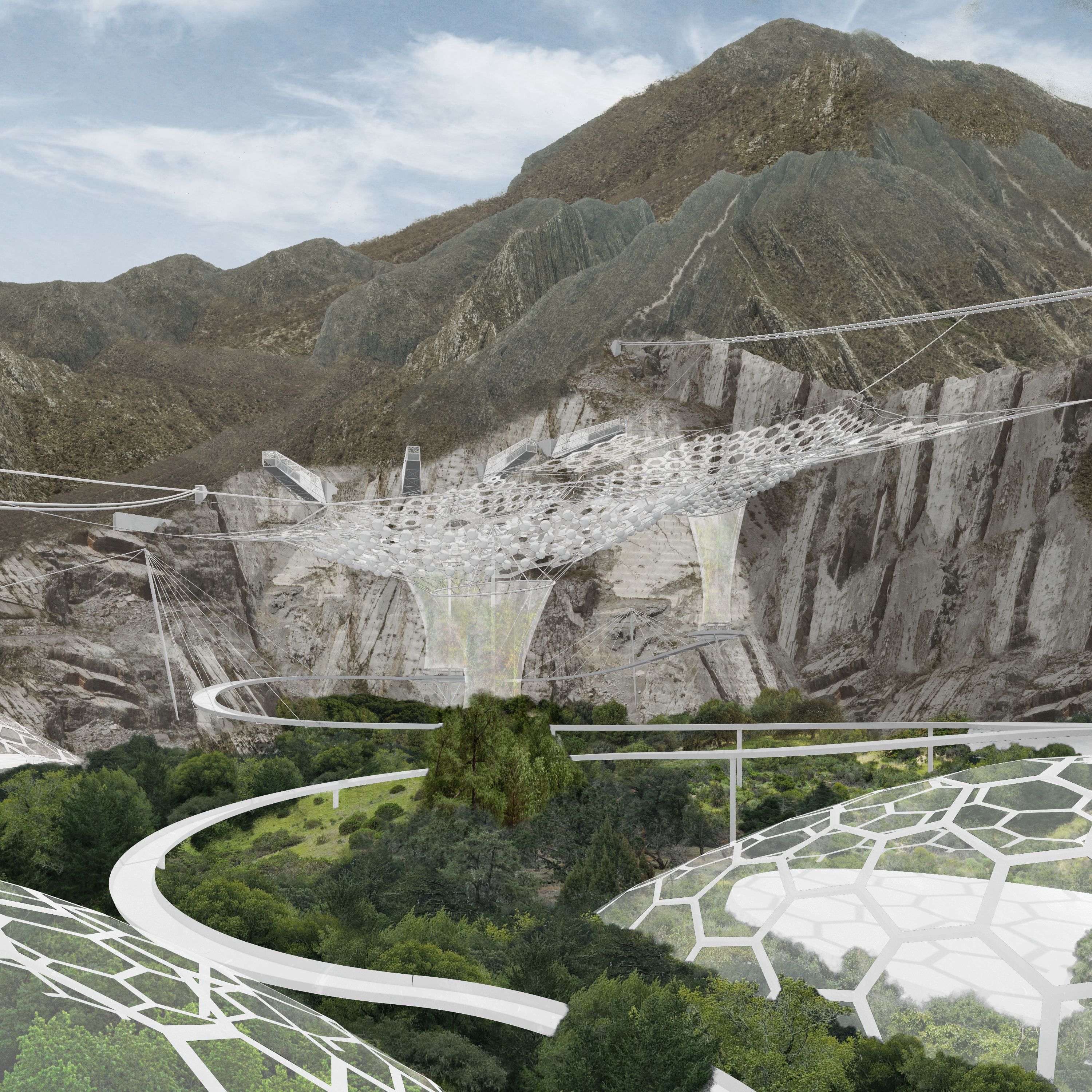

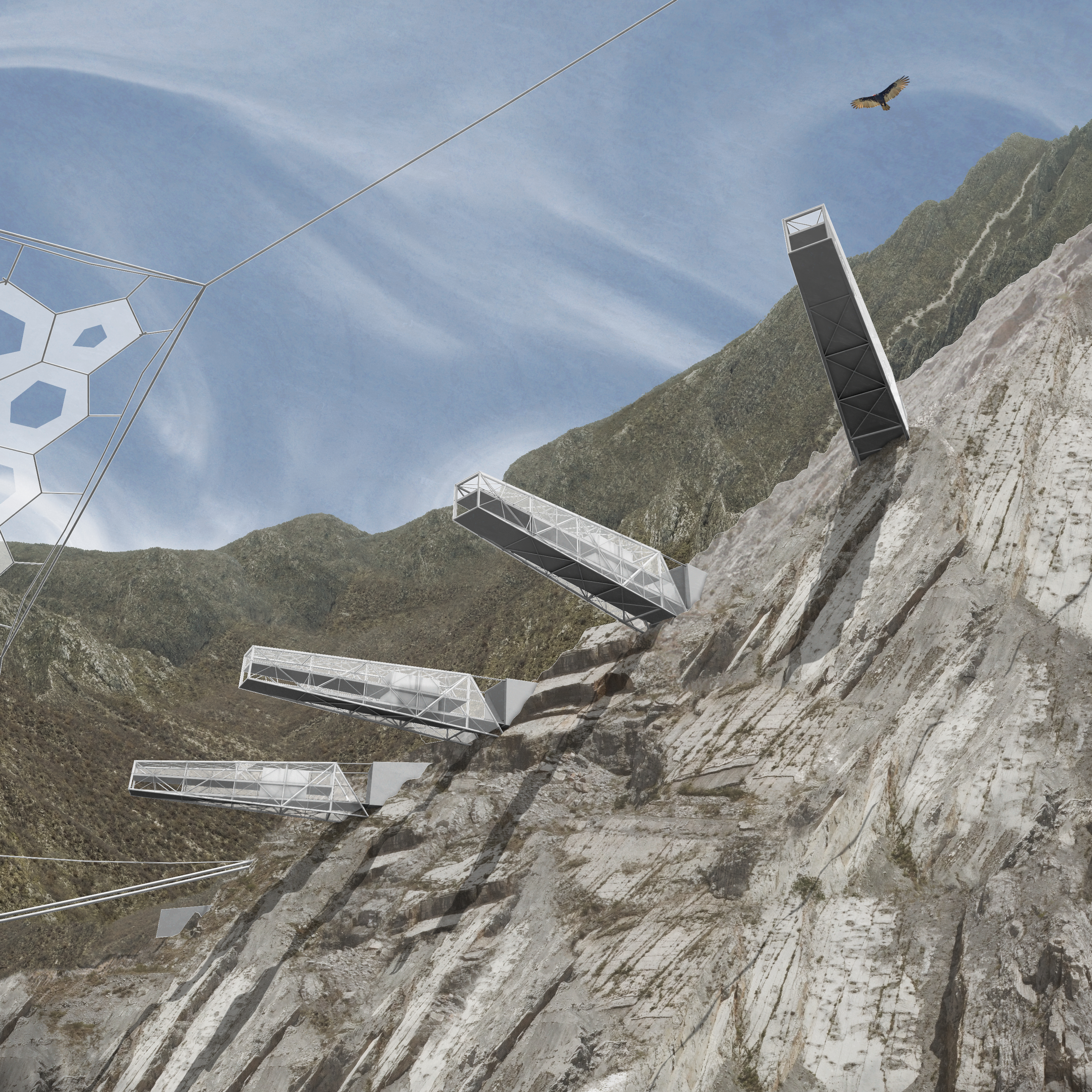
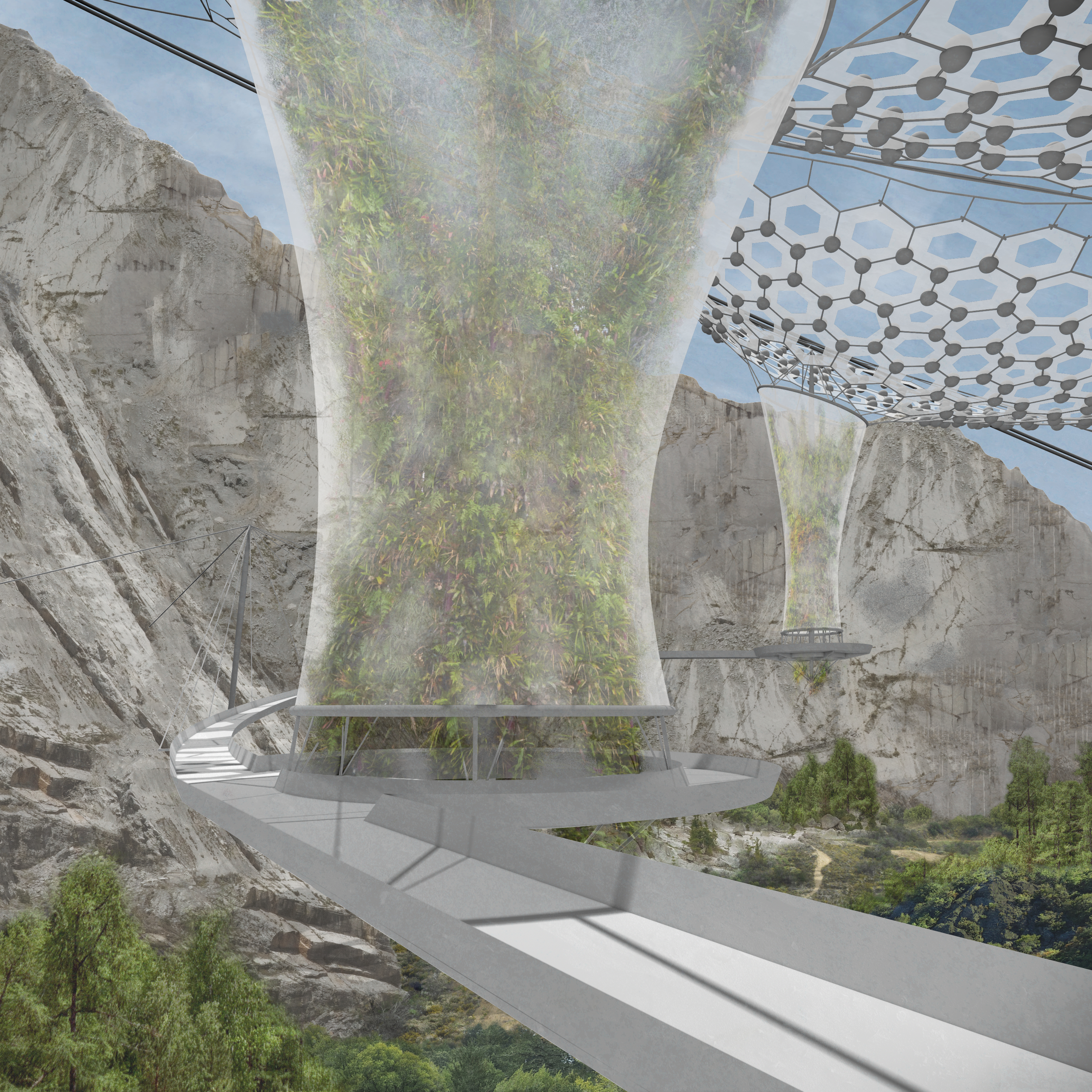
In nature as in human industrial activities, all things are in movement and constant cyclical transformation. The project rejects the notion of a static architecture. As the site transforms, the architecture deploys itself, responding to the end of resource extraction at the site, and deploying itself in order to accelerate the ecological regeneration and transformation of the site. Modelled after a pioneer species,the architecture grows into sites of devastation to build the ecosystem anew.
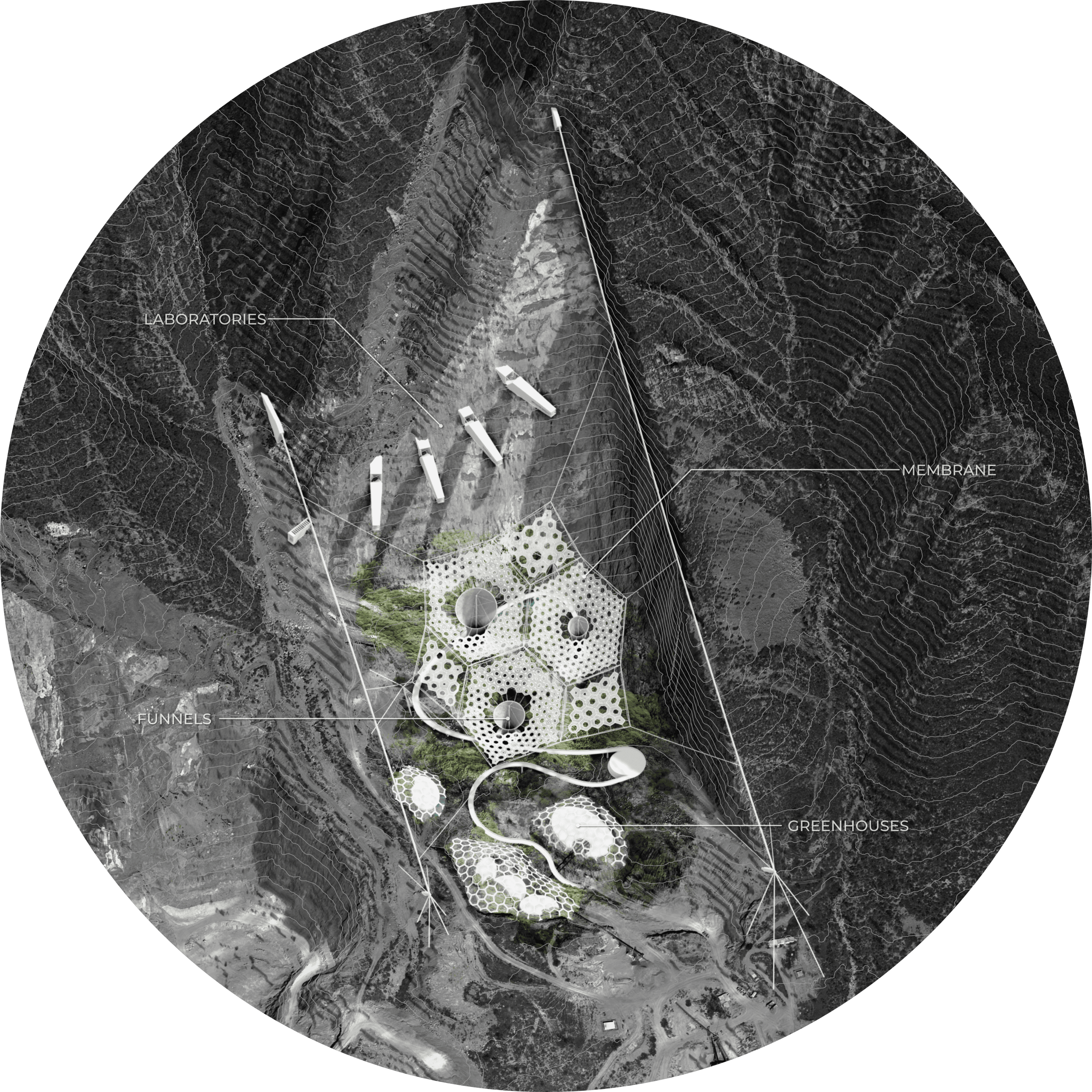
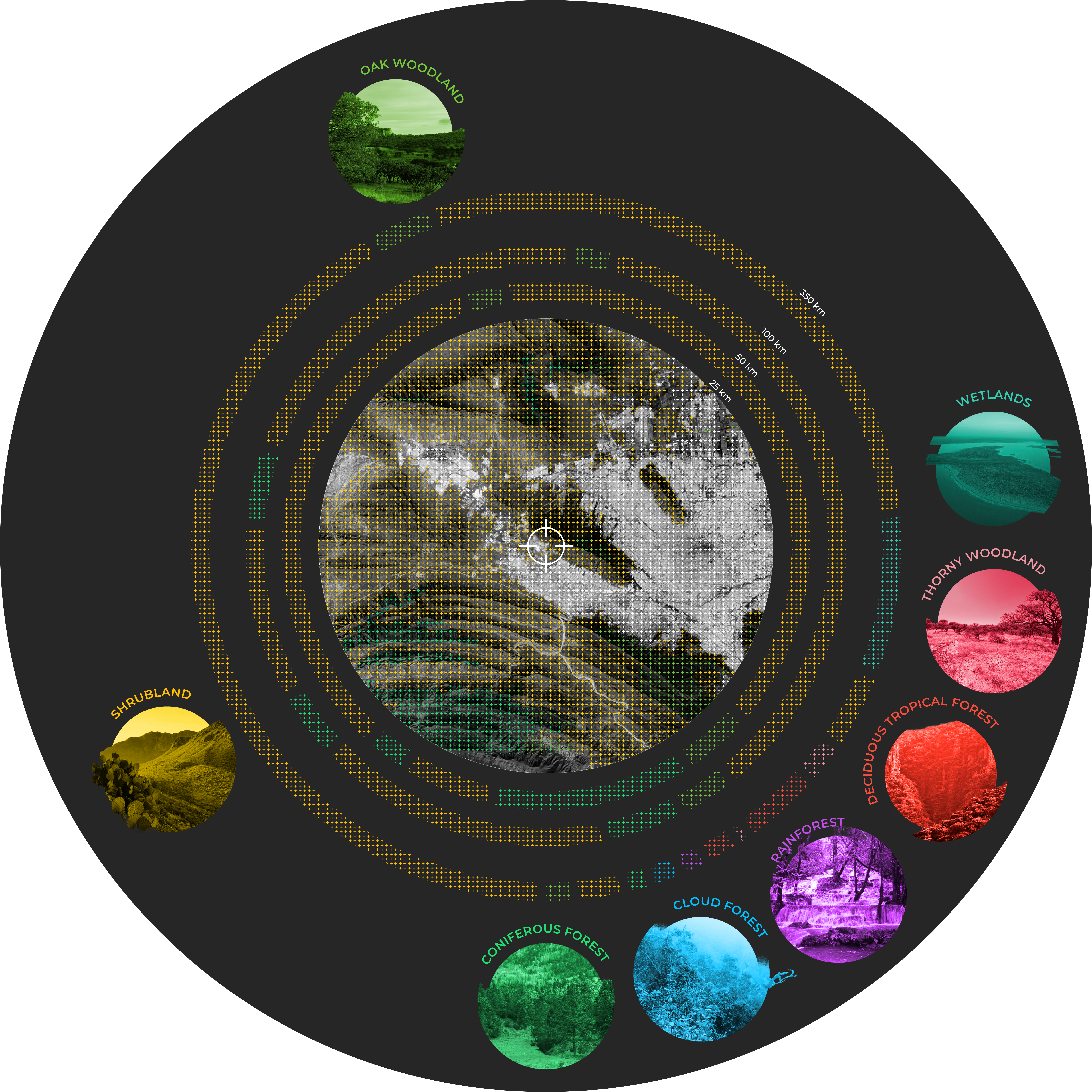
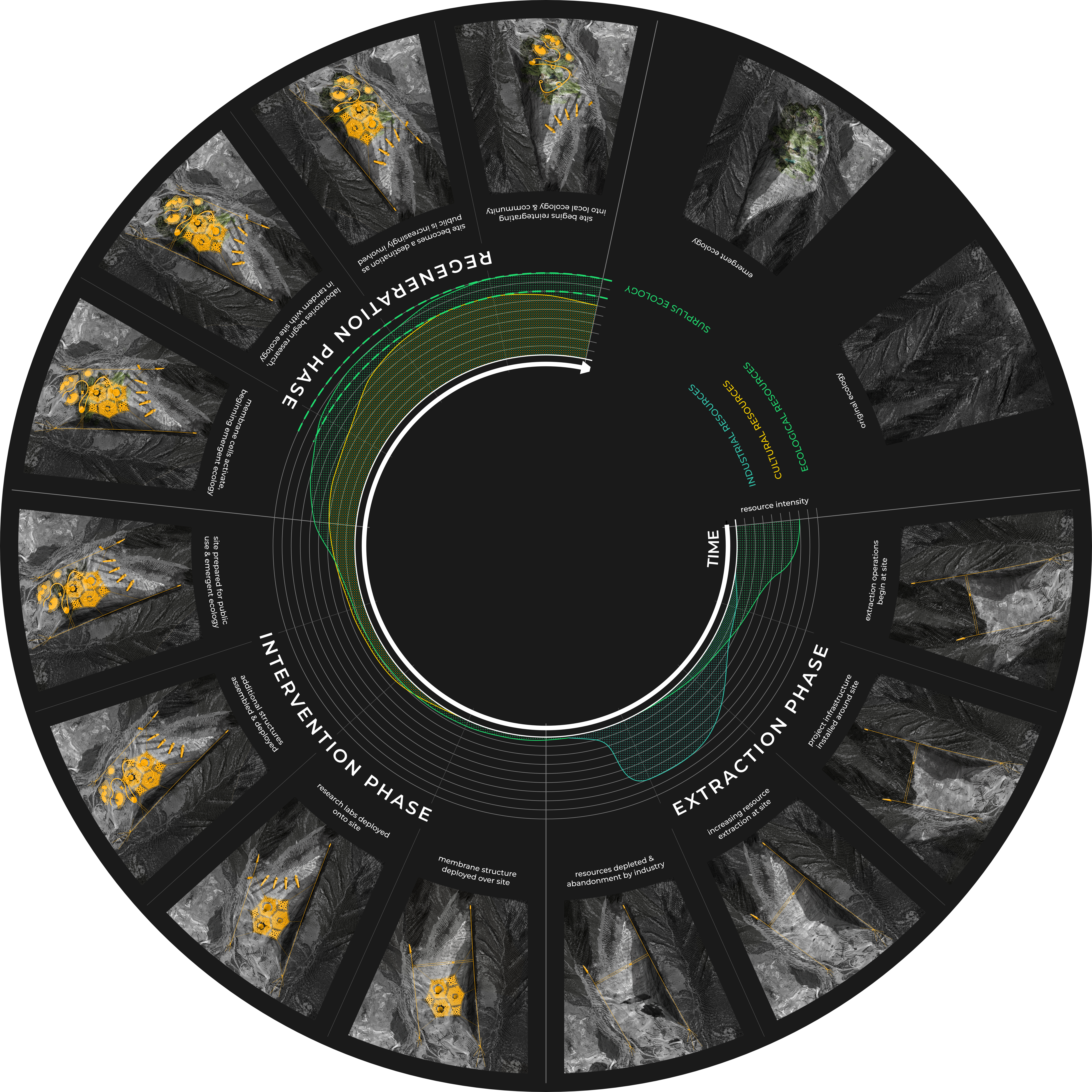
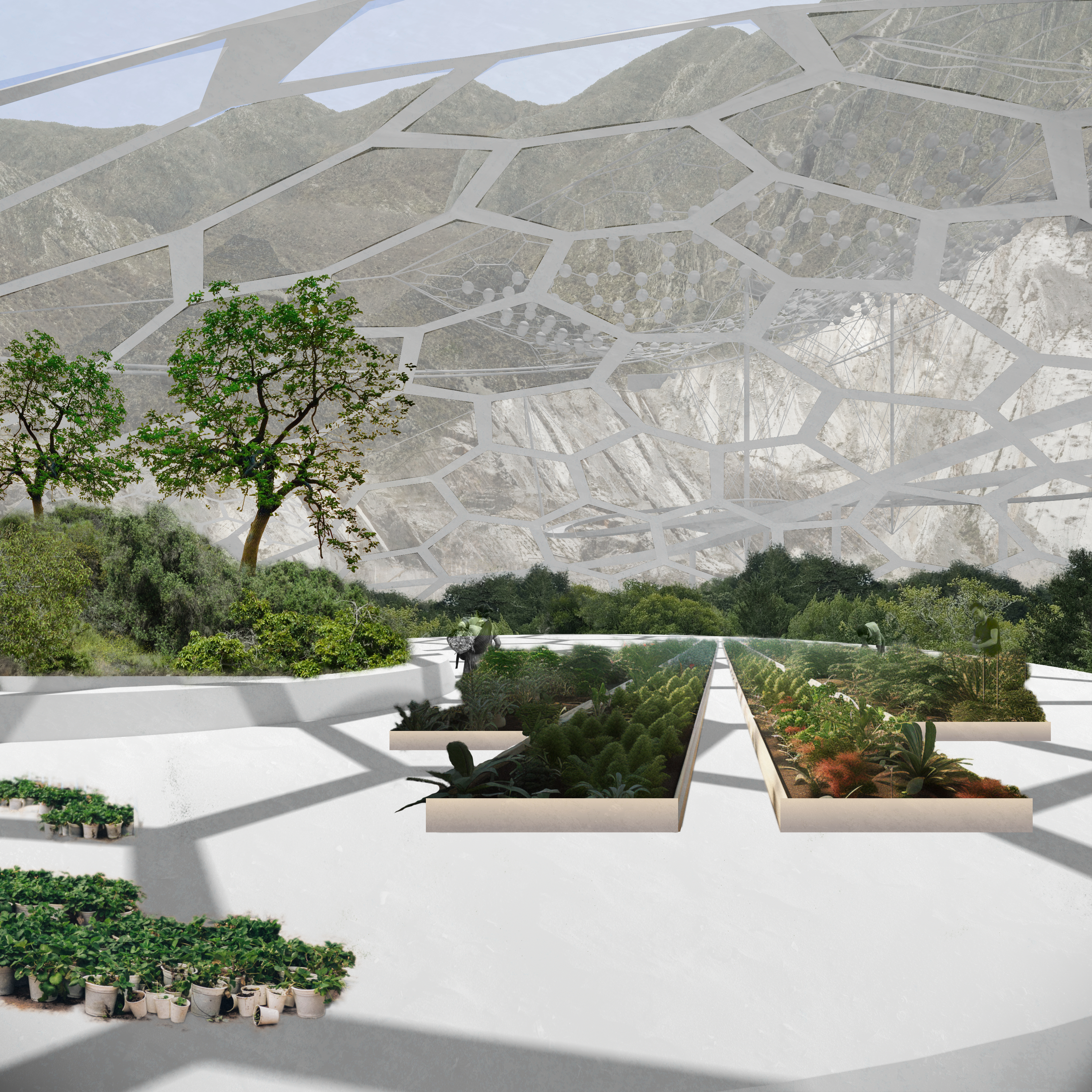
The project considers architecture as tool in the creation of emergent ecologies. The megastructure - a parametrically designed tension membrane - takes in resources from its environment and concentrates them for strategic redeployment. Cells distributed throughout the membrane deploy resources as needed, producing a kind of ecological canvas, a miniaturized simulation of real-world ecosystem dynamics.
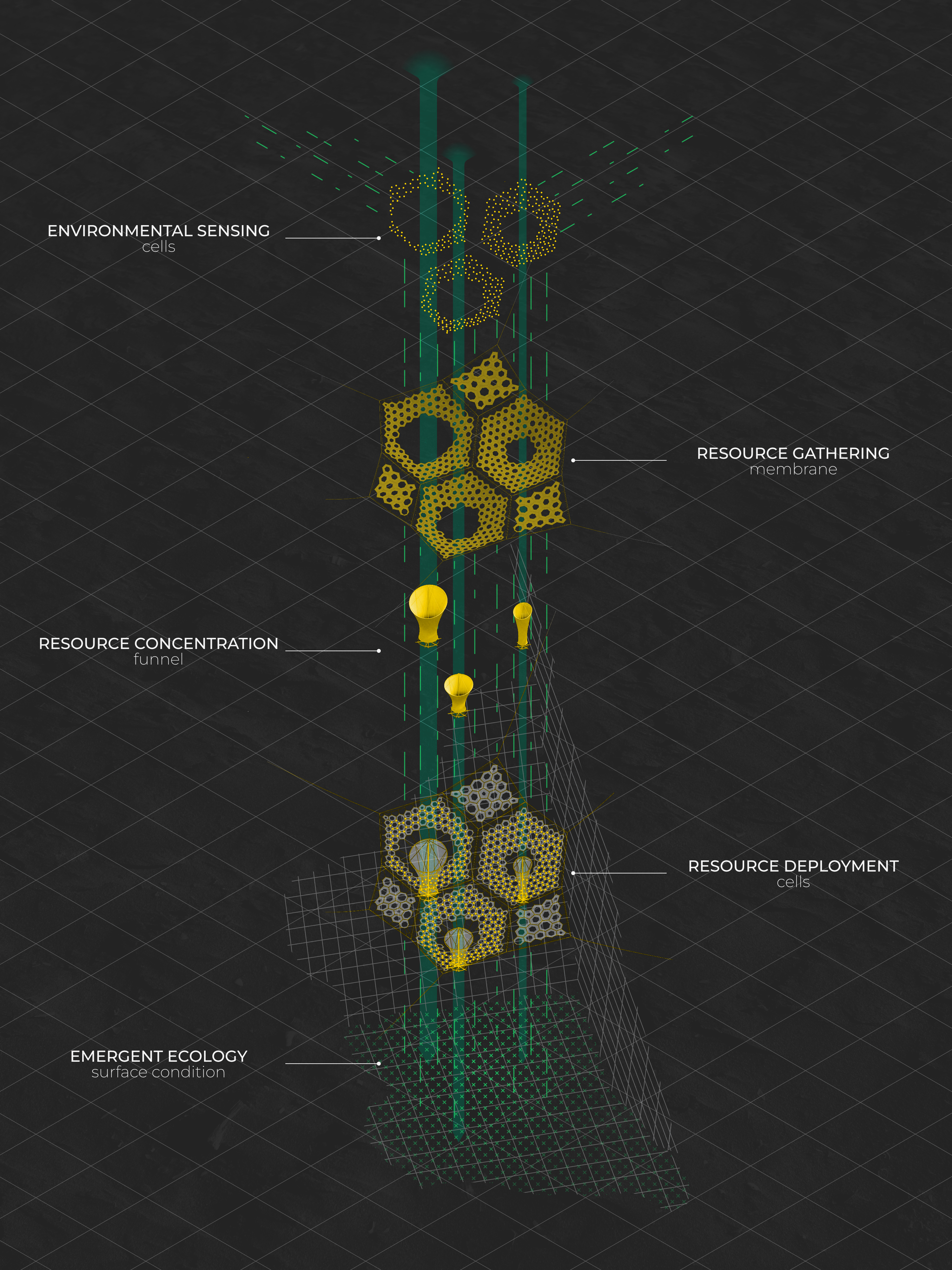
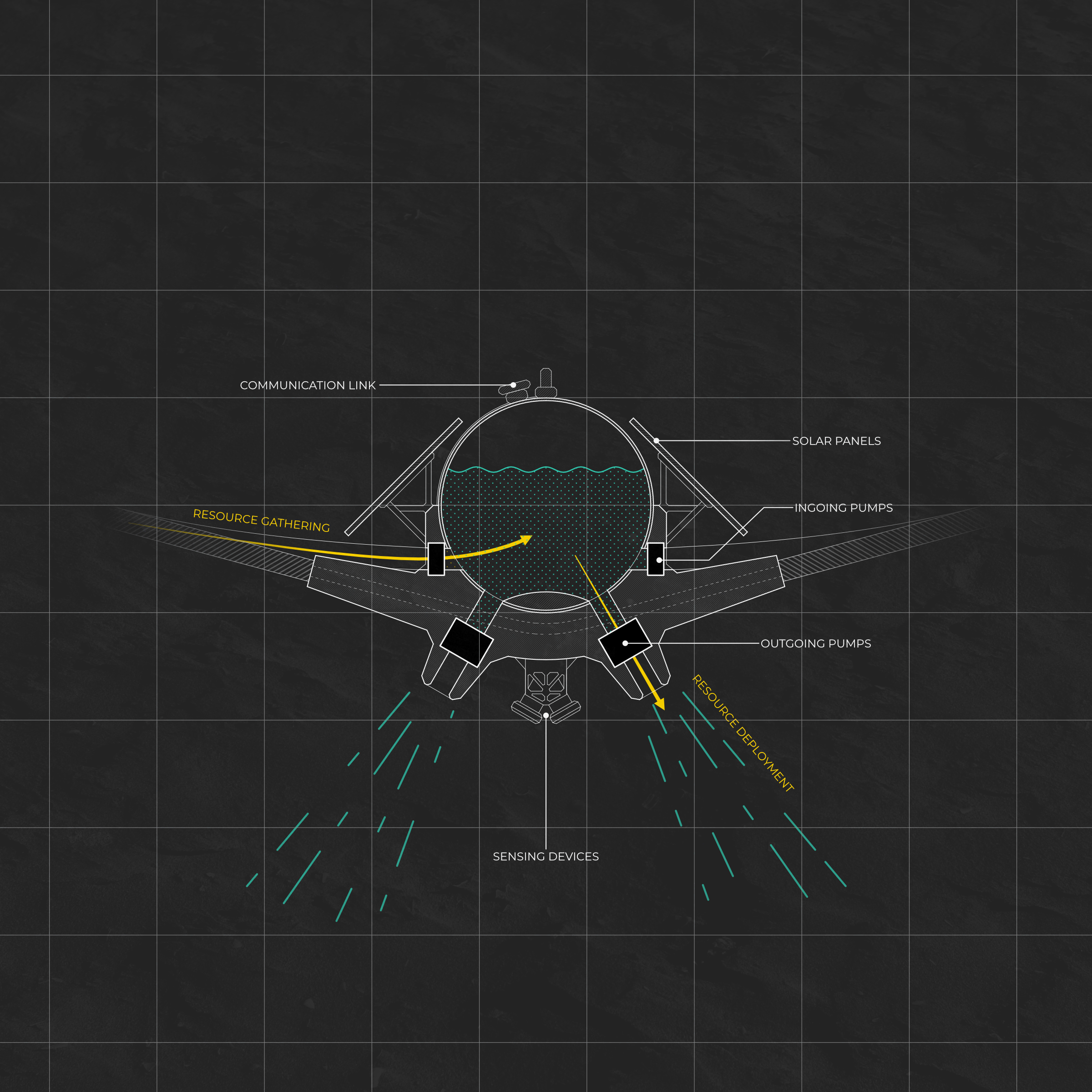
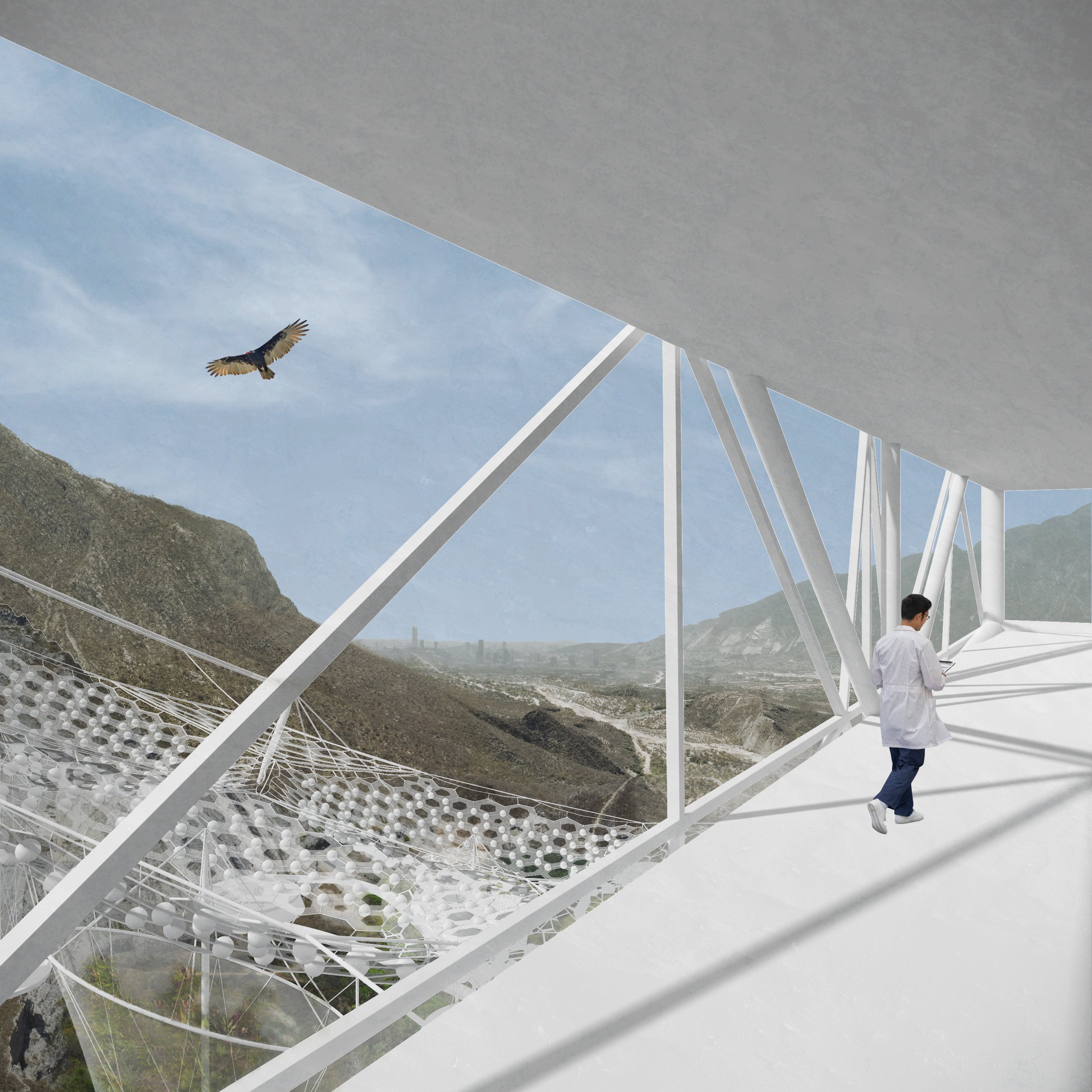
This canvas provides a platform for nascent ecological research, headed from laboratories safely perched on the walls of the quarry, and for a visiting public, who can experience, learn from, and contribute to this research.
The cells, under the command of scientists or the visiting public, can be strategically activated so as to produce emergent ecologies both unexpected and carefully calibrated. In this canvas, the scientist and the citizen become witnesses and drivers of an experimental ecology where unexpected possibilities may yet emerge as man and nature work in concert.